Allergy Test VR
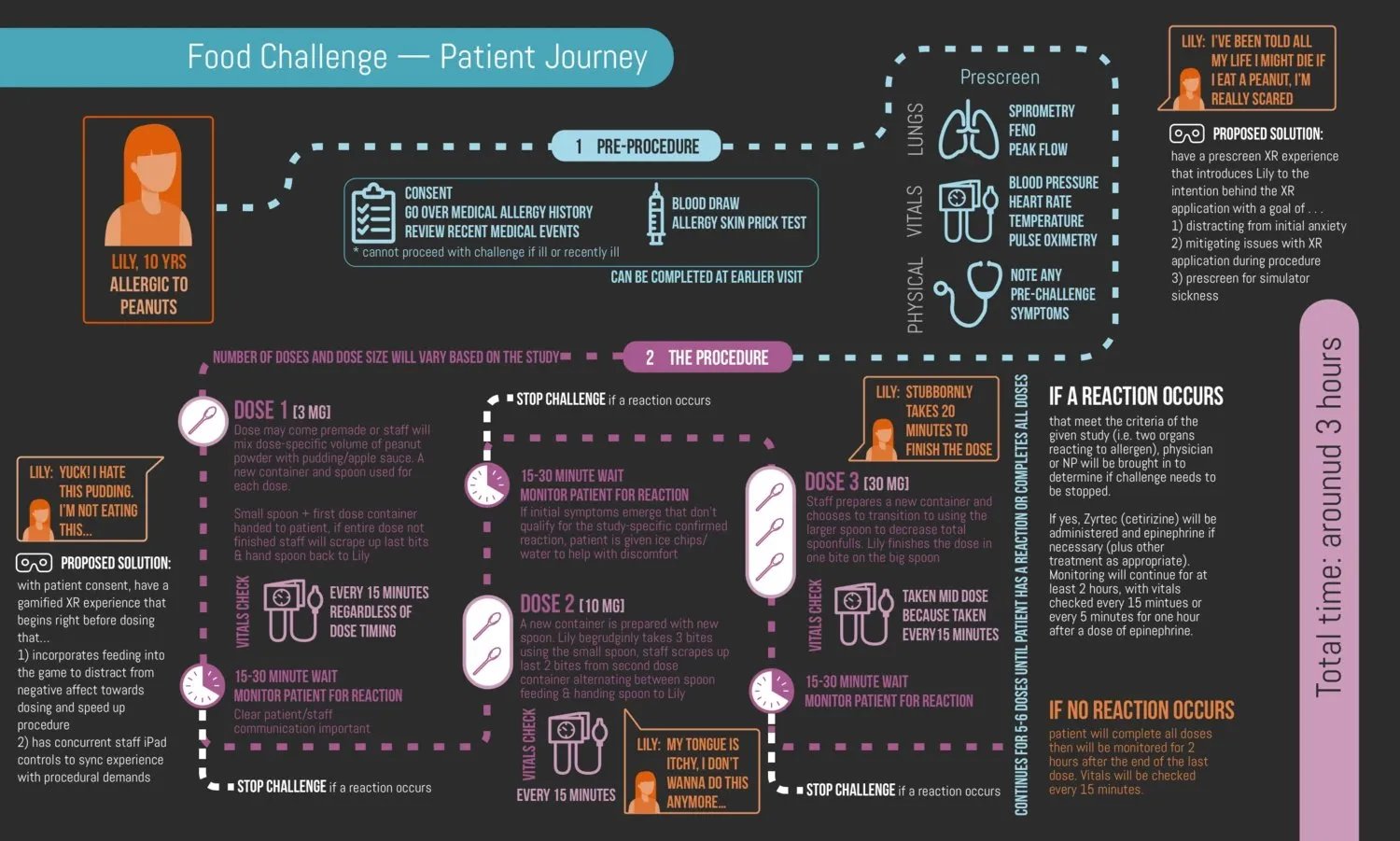
An Oral Food Challenge is one of the more stressful medical procedures a child can go through. Under supervision, they eat gradually increasing doses of a suspected allergen (peanut, egg, milk) while doctors monitor their reaction. For young kids, the anxiety alone can produce symptoms that look like an allergic response, complicating the diagnosis and prolonging the test. The question was whether immersive technology could reduce that anxiety enough to make the procedure go more smoothly. I went in without a predetermined answer. Working through Stanford's Virtual Human Interaction Lab in partnership with Sean N. Parker Center for Allergy and Asthma Research, we ran three sequential research phases: a need-finding with doctors and patients, a prototyping and development phase for VR in a medical setting, and a feasibility pilot. I spent months observing OFCs at Stanford Children's Hospital before anything was designed.
Client
Virtual Human Interaction Lab
Service
Research & Design
Year
2020
What became clear quickly was that the hospital environment itself was a significant source of anxiety. Existing distraction tools like tablets, toys, and parents helped between doses but did almost nothing during the actual eating. These interventions treated the difficult moment as something to get through. I wanted to invert that. Instead of distracting kids from eating, what if eating was the thing they wanted to do? I set out to make the bite the reward.
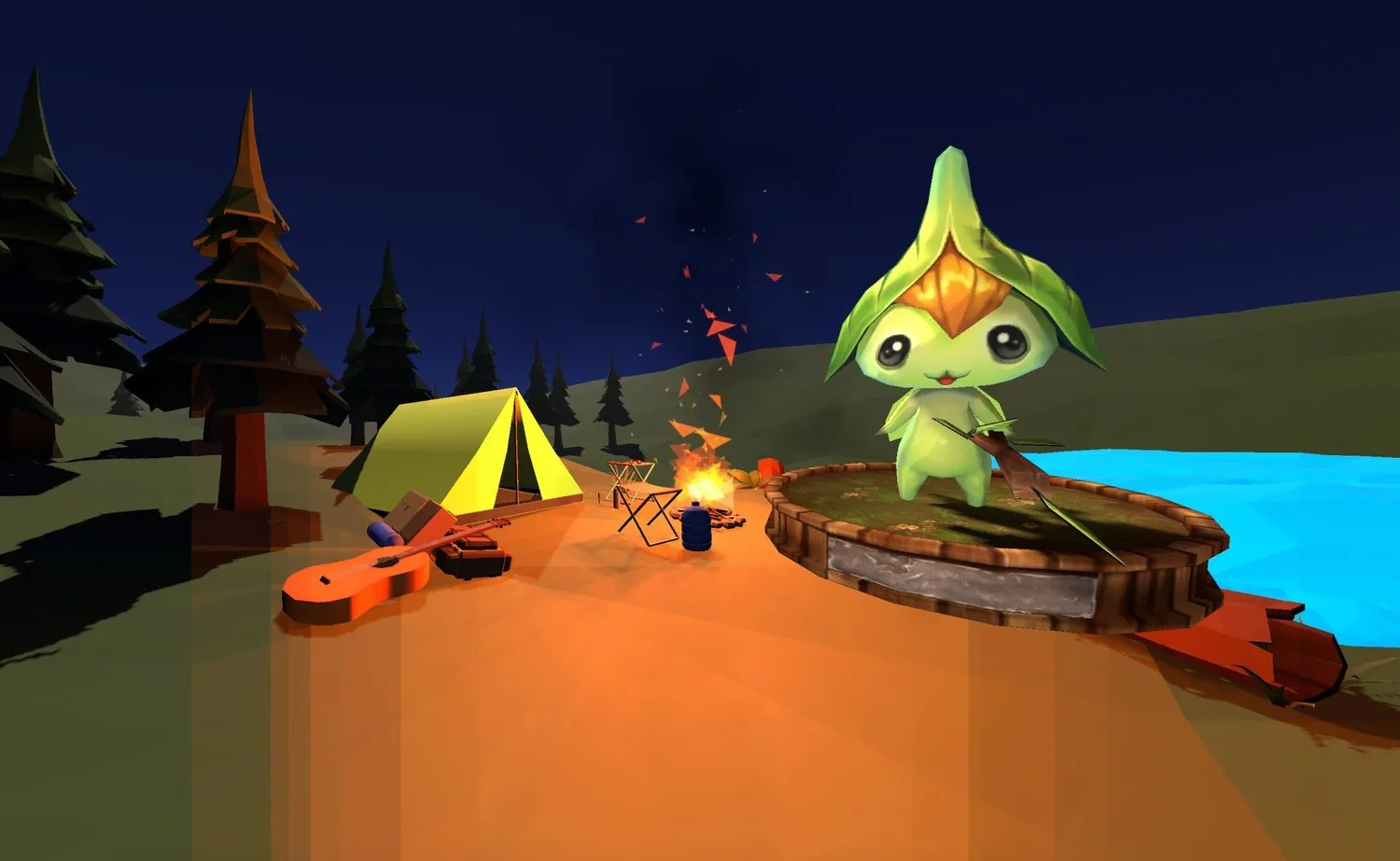
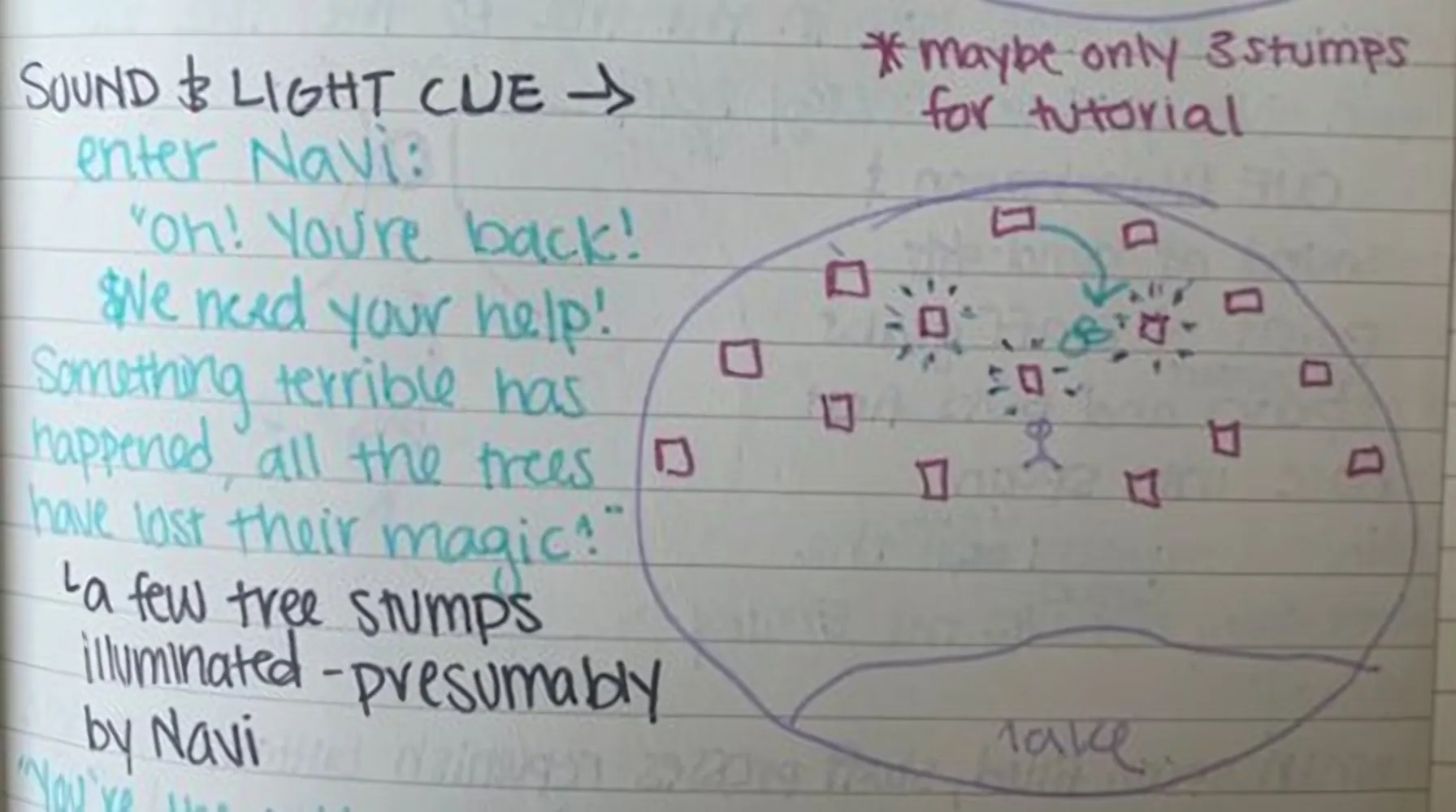
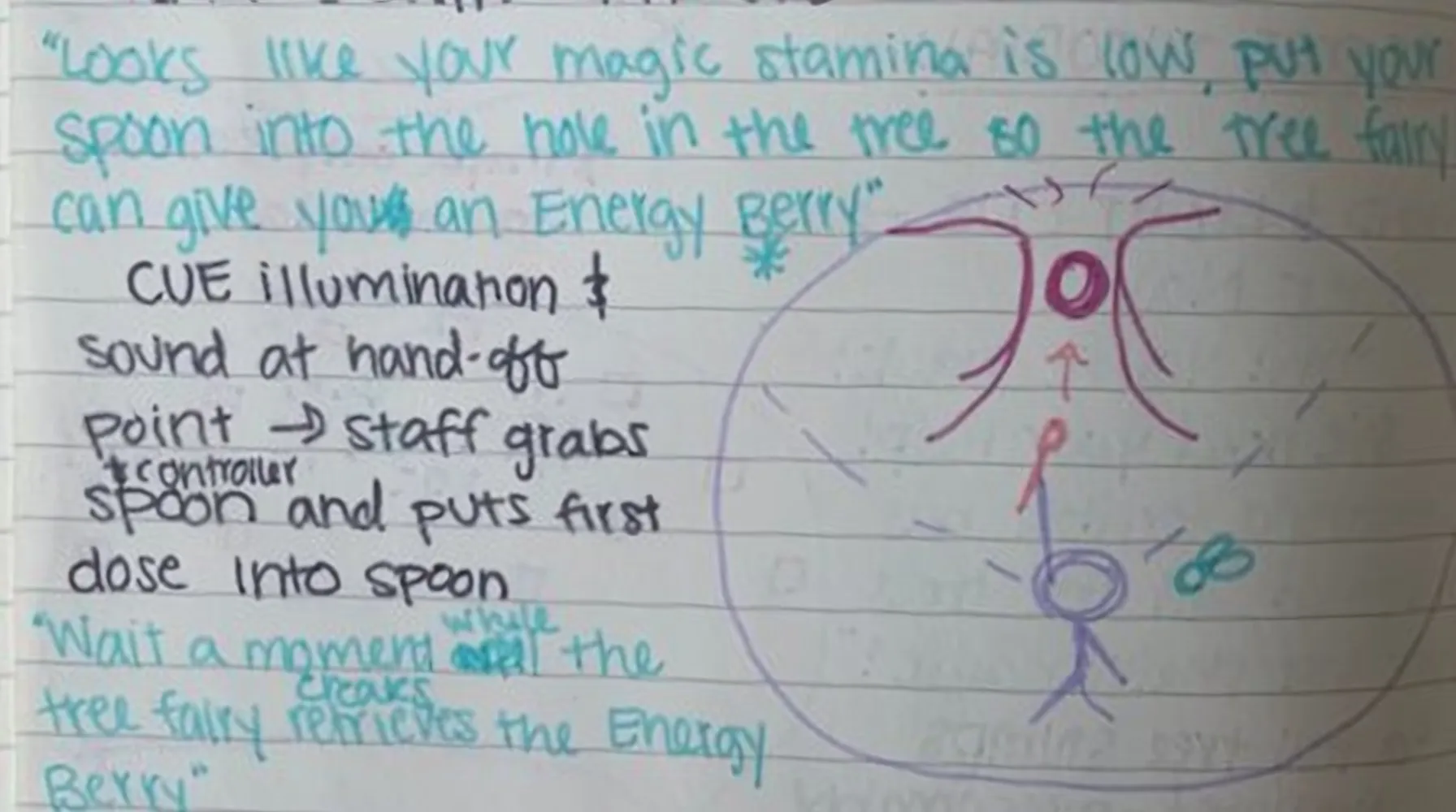
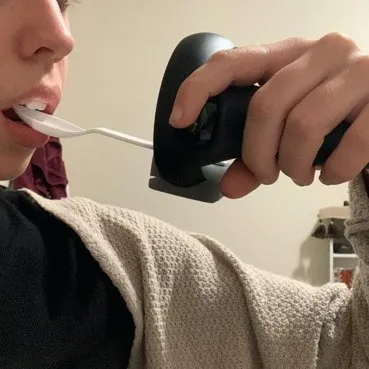
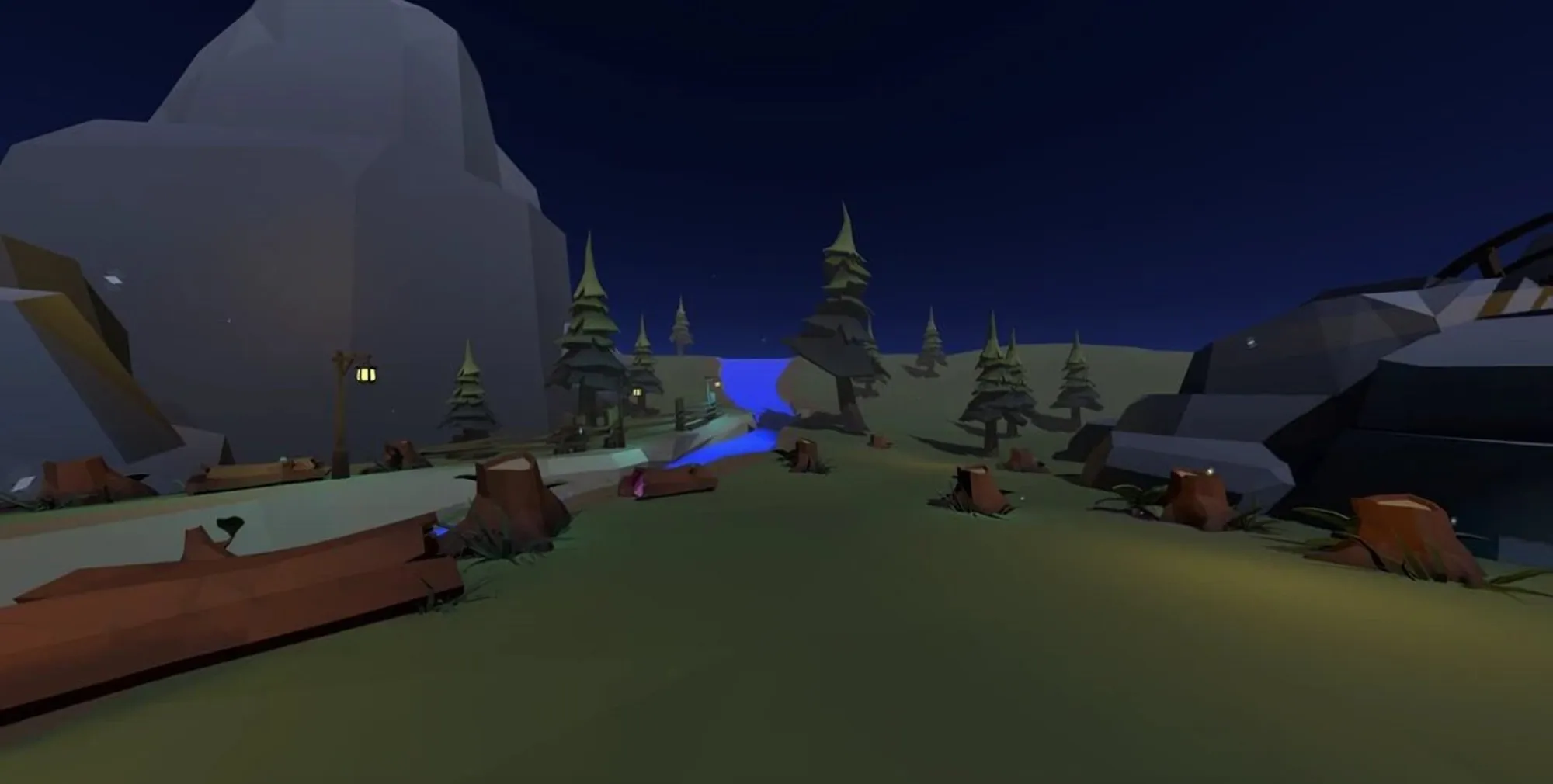
In the experiuence, patients gain magical powers by consuming glowing energy orbs. Each bite strengthens their abilities and advances the story. We tracked the spoon in real-time so that real-world eating translated directly to in-game progress. We prototyped multiple different 3D-printed attachments that connected the spoon to the VR controller. The setup had to work for older kids who can self feed and younger patients who would be fed by a nurse. The other key part of this was creating a companion experience for the nurse to mark when a bite was complete. Just recognizing it through proximity could result in false positives. After a successful bite, patients could use their powers to transform the stumps and fallen trees in a barren forest into a living, magical forest. Each spell cast returned color to the world and made the next bite something to look forward to.
The MVP was handed off to hospital researchers in early 2020. The feasibility study was published in the Journal of Allergy and Clinical Immunology. Most participants reported reduced anxiety and they wanted to use the experience again for future OFCs. The last finding was the one that mattered the most to me. This was a procedure kids dreaded (I saw it first hand many times). And there was now something about it they looked forward to. That's the whole goal. The paper also indicated that next steps should explore a similar experience in mixed reality rather than full VR (a finding the medical staff had intuited early on). Fully removing patients from the hospital environment made some parts of the procedure harder to conduct. MR, which keeps the real world visible while layering the game on top of it, is likely the right long-term direction. It's a meaningful design conclusion: immersion has a threshold, and in a medical context, crossing it entirely isn't always the right call.