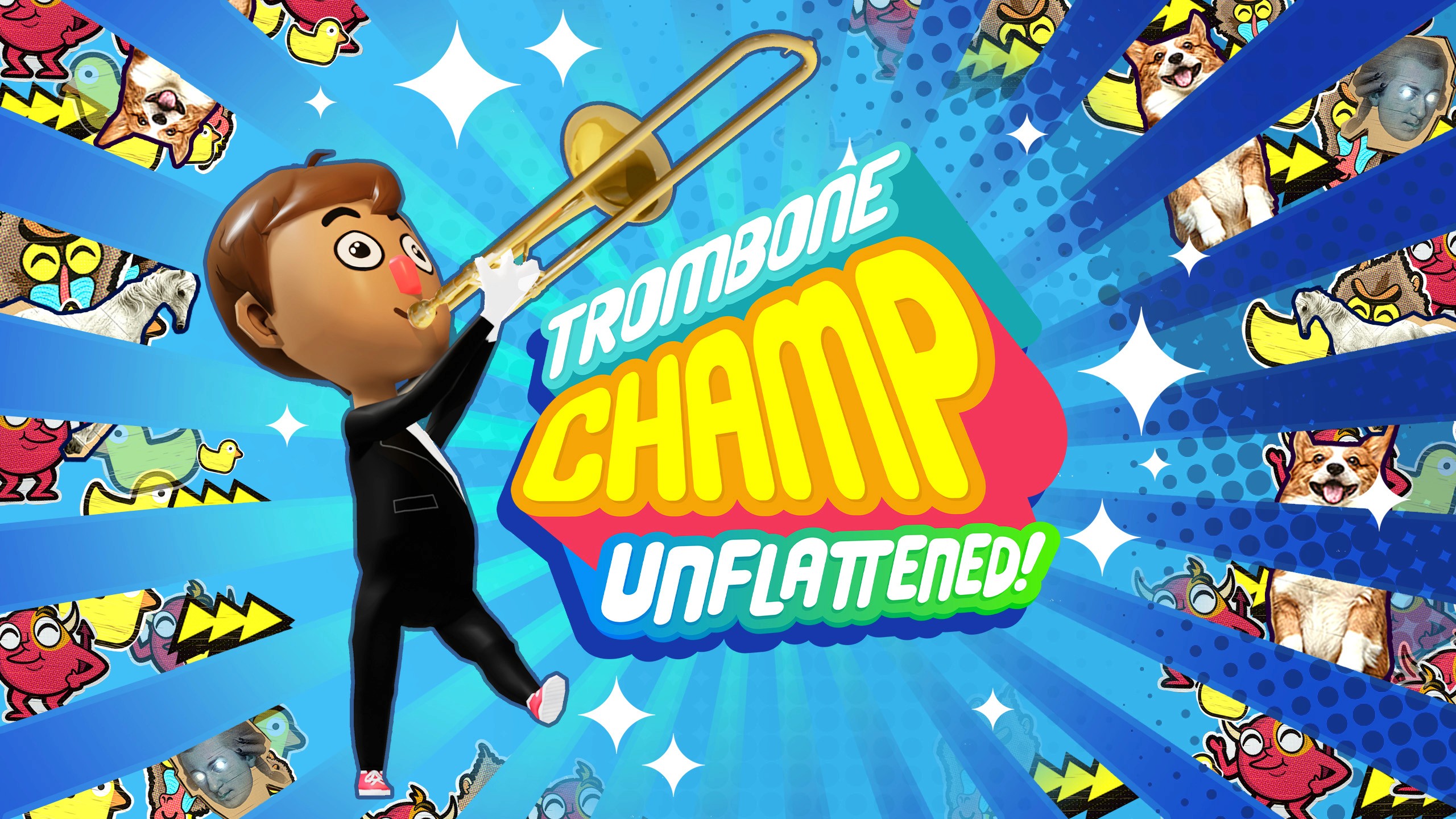
Trombone Champ: Unflattened

A VR reimagining of the viral rhythm game, expanding its quirky humor into a full campaign, trombone economy, and immersive musical experience.

00

problem

The original Trombone Champ became an internet sensation for its chaotic humor and parody of rhythm games. But its success posed a challenge for VR adaptation. We had to create a game that preserves the absuridty, while adding systems depth; make a physical trombone-playing gesture feel musical, while maintaining long-term retention.

solution

Unflattened transforms Trombone Champ into a full VR experience. It is not just a port, but a complete reimagination of the structure and progression of the game. Players embark on a trombone-centric filled journey filled with challenges, unlocks, and customization. The new economy and campaign give players long-term goals while keeping the humor intact.

I was Creative Lead on TCU, responsible for the campaign structure, the progression and economy systems, and overall design direction of the VR-exclusive content. That meant working across game design, UI/UX, and art to make sure everything we built felt like it belonged in the Tromboner universe.

I built the campaign structure from the ground up, transforming each song into a self-contained journey with three distinct challenges. To give players reasons to keep playing beyond high scores, I designed a trombone-based economy that rewarded mastery and collection. Players can earn, unlock, and customize instruments with their own distinct personalities.

Working closely with the art team, I oversaw the creation of more than fifty trombones, each balancing visual flair, rarity and humor. I also guided the UI/UX direction to ensure every interface, from menus to progression screens, felt grounded in 3D space and part of the Tromboner universe.

TCU launched in November of 2024 and was recognized among the Most Innovative Apps in Meta's Best of Quest end of year awards. The game holds a 4.8★ rating on the Meta Quest Store (381 reviews) and an 83 on Metacritic. Since launch, I've continued to lead design and feature development, expanding the game with new content, systems, and rewards that sustain its community and keep the experience evolving.

year

Flat2VR

year

Flat2VR

year

Flat2VR

year

Flat2VR

timeframe

12 months

timeframe

12 months

timeframe

12 months

timeframe

12 months

tools

Unity, Figma, Adobe Suite

tools

Unity, Figma, Adobe Suite

tools

Unity, Figma, Adobe Suite

tools

Unity, Figma, Adobe Suite

team

Flat2VR

team

Flat2VR

team

Flat2VR

team

Flat2VR

category

Game Design | Interaction & Retention System

category

Game Design | Interaction & Retention System

category

Game Design | Interaction & Retention System

category

Game Design | Interaction & Retention System

01

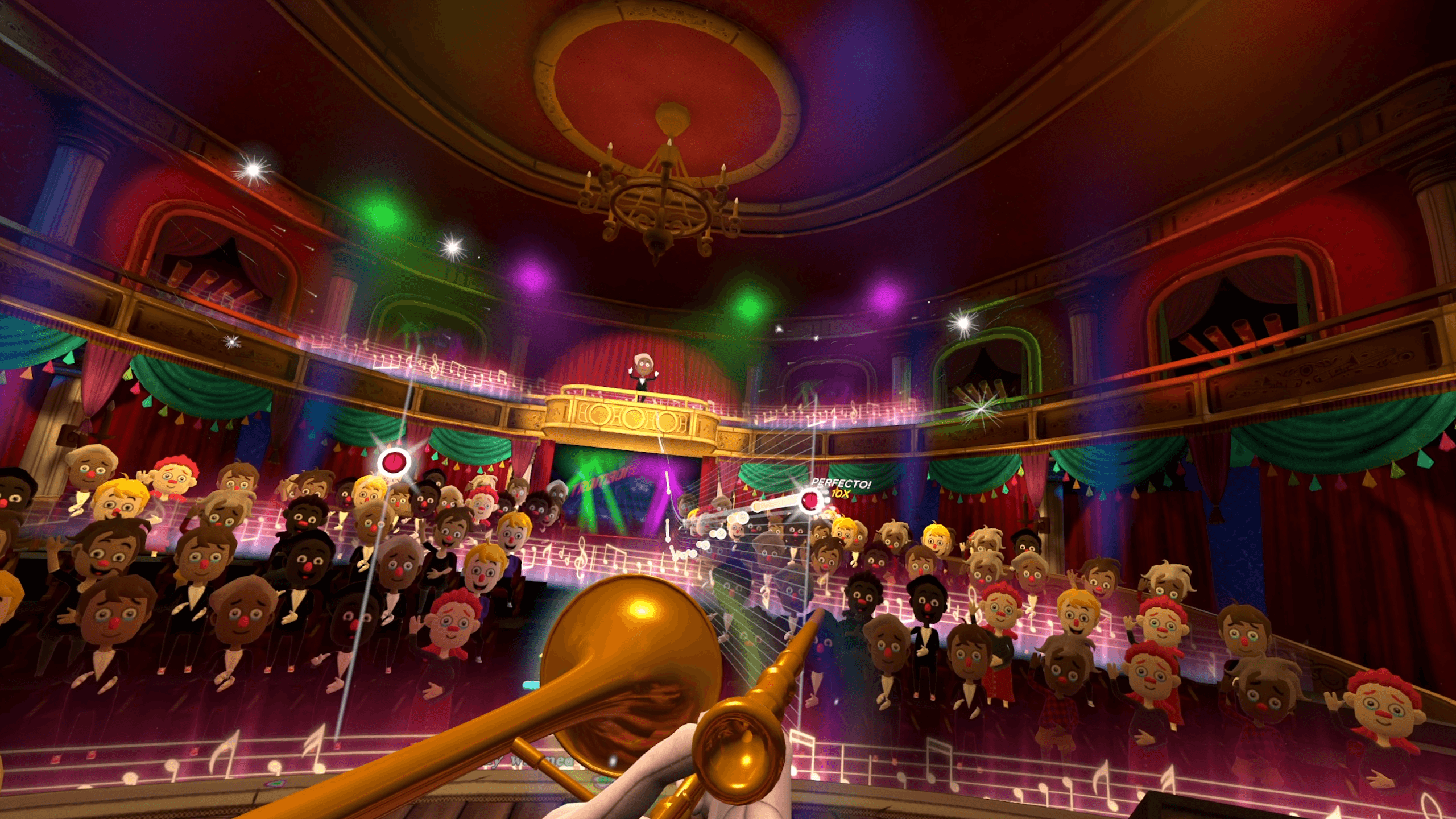
The theater was an anchor decision early on, sending us decisively towards spectacle-driven performances. Giving players a live audience with reactive expressions raised the stakes of every note and made playing badly just as engaging as playing well. It was also a key part of tying in the familiar Tromboner character from the original game.

02

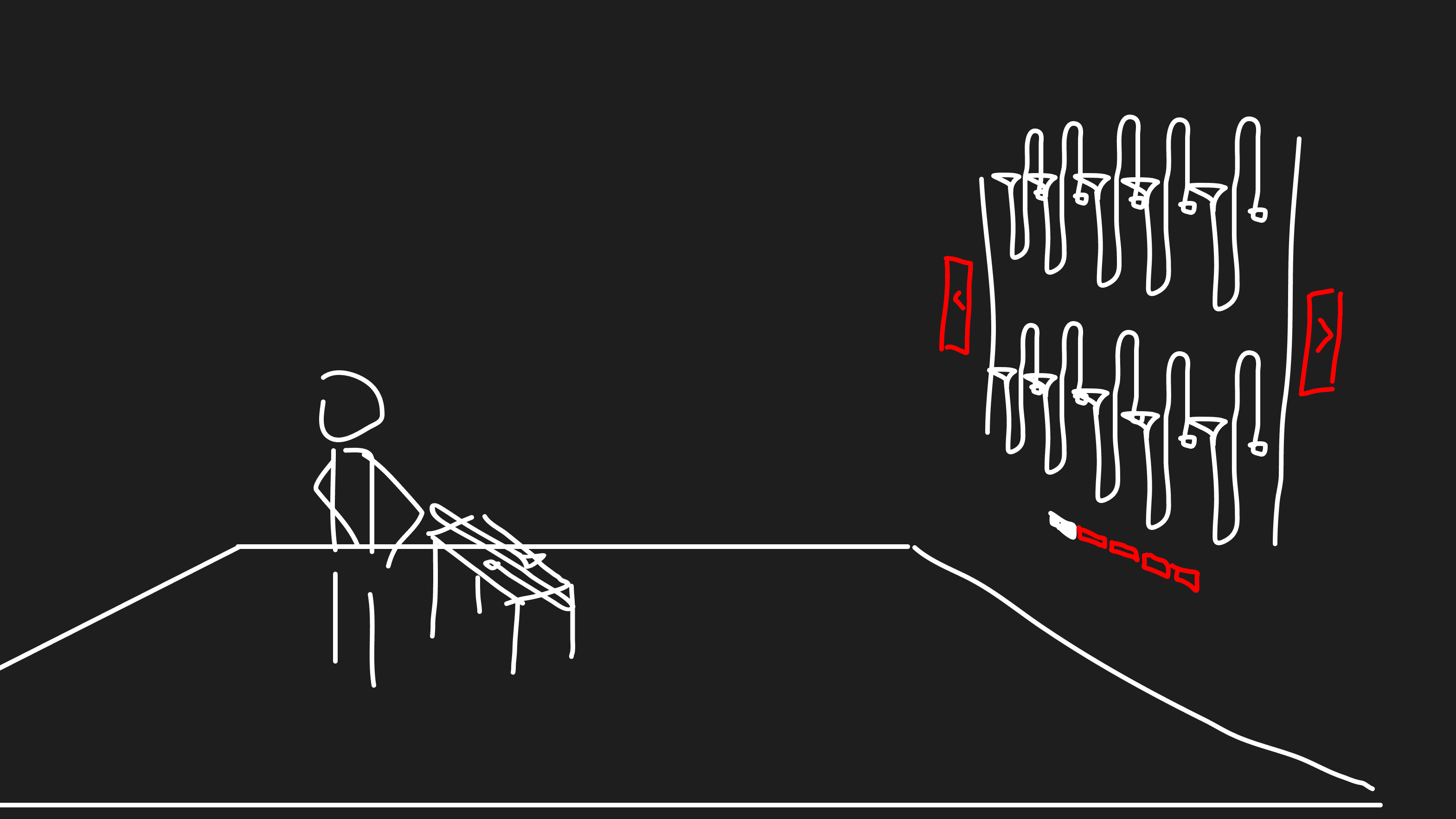
One of the first design constraints we set was that no interface should feel like a floating UI screen. We wanted everything to exist or at least feel like it was in the world. These early sketches explored how the trombone collection could live as a physical rack of instruments on stage. The menus and diegetic interactions were some of the hardest and important calls we made.

03

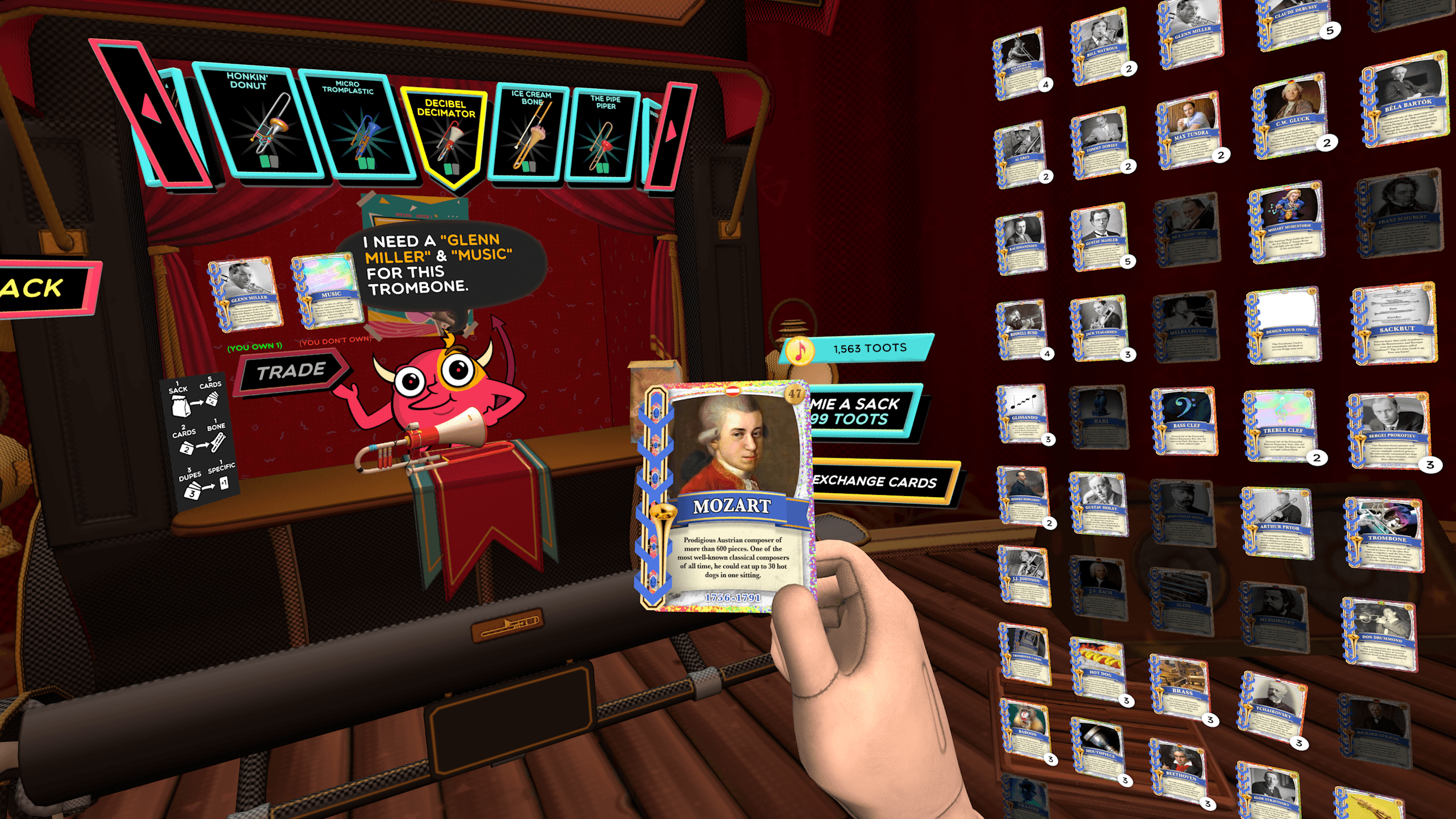
The economy had to justify itself in the Tromboner universe, especially when the base game actively makes fun of game economies through its absurdity. We kept the silliness (pointless currency conversions, a barter system), but used it as a vehicle to introduce something the base game lacked: cosmetics. Trading cards in for trombones and gloves gave players a reason to grind Toots, which gave the cards meaning, which made the whole loop feel worth it. The physical handling of earning and spending in VR did the rest.

.say hello

open to new opportunities, let's connect

.say hello

open to new opportunities, let's connect

.say hello

open to new opportunities, let's connect

.say hello

open to new opportunities, let's connect